
Utility Calculators For → Everyday Calculations → Quick & Accurate Results → Work & Business Needs → Daily Life Tasks → Fast Online Solutions → Practical Calculations → Saving Time & Effort → Smart Everyday Decisions

time-calculator
Calculate Your Exact Age Birthday Birth Year DOB Age in Days Age in Months Real Age Next Birthday Time Calculator Fast & accurate Time Calculator Add or
date-calculator
DateWise | Pro Date Analytics Back to Tools Holiday Settings Share DateWise . Professional Date Analytics & Time Calculations Difference
age-calculator
Calculate Your Exact Age Birthday Birth Year DOB Age in Days Age in Months Real Age Next Birthday Track your exact age, birthday countdown, life metrics, zodiac
due-date-calculator
Pregnancy Due Date Calculator Pregnancy Due Date Calculator Estimate your baby’s delivery date from your last period, conception date, ultrasound,
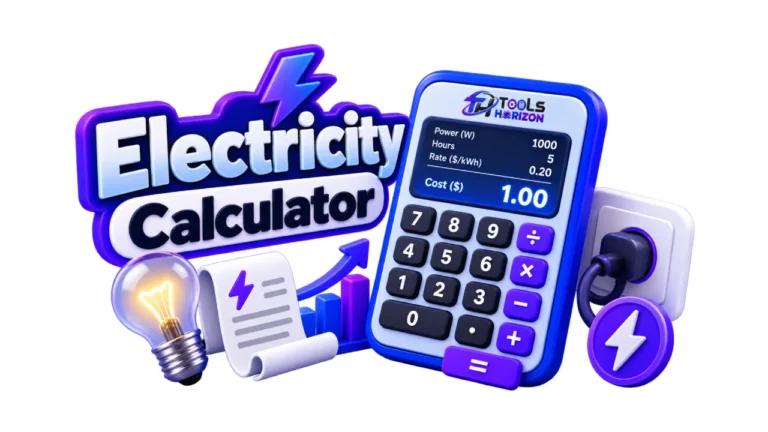
Electricity Calculator
Calculate Your Exact Age Birthday Birth Year DOB Age in Days Age in Months Real Age Next Birthday Electricity Cost Calculator – Premium SaaS Tool Electricity Cost
Calculate Your Exact Age Birthday Birth Year DOB Age in Days Age in Months Real Age Next Birthday
Loan Payment Calculator: Auto, Mortgage & Amortizing Loans
A loan payment calculator is a financial tool used to estimate your monthly payments, total interest, and complete amortization schedule for various types of debt. By entering your loan amount, interest rate, and loan term, you can instantly calculate your exact monthly payment amount, helping you budget effectively and understand the true cost of borrowing before signing any paperwork.
What Is a Loan Payment Calculator?
When you borrow money, whether for a new house, a car, or personal expenses, understanding exactly how much you will owe each month is critical. A loan payment calculator takes the complex math out of borrowing. It uses your principal loan amount, the loan’s interest rate, and the repayment terms to provide a clear picture of your financial obligations.
This tool acts as a versatile financial companion. It can function as a house payment calculator, a vehicle loan calculator, or a simple interest payment calculator. Whether you are dealing with a fixed interest rate loan or evaluating an adjustable rate, this calculator breaks down your payments into easy-to-understand numbers.
By using a payment calculator, you can visualize the life of the loan. You will see exactly how much of your money goes toward the principal balance and how much is paid to the creditor in interest. This is known as an amortizing loan structure, where payments are spread out evenly over time.
How Does a Loan Payment Calculator Work?
To understand how to calculate your loan, it is helpful to know the basic components that make up a loan repayment plan. Every time you make a monthly payment, the money is split between the original loan amount (the principal) and the cost charged by the lender (the interest).
Here are the primary factors that affect your calculations:
Loan Amount (Principal): This is the total loan amount you are borrowing. If you are buying a car, it is the price of the car minus your down payment.
Interest Rate: This is the cost of borrowing money, expressed as a percentage.
Loan Term: This is the length of the loan term, usually expressed in months or years (e.g., a 30 year loan calculator setting for a house, or a 60-month term for a car).
Use This Calculator to View Your Amortization Schedule
Every time you make a monthly payment, your money is split between reducing the principal balance and paying the lender’s interest. This gradual reduction of debt over time is known as amortization. To truly understand the true cost of your debt, you need to see exactly how your mortgage payments and other loan installments break down month by month. We highly recommend that you use this calculator as your primary loan calculator to automatically generate a complete amortization schedule. By reviewing this detailed schedule, you can visualize your path to becoming debt-free and discover how making extra payments can save you thousands in interest.
How to Use This Tool
You do not need to know how to use a financial calculator to get accurate results. Our tool is designed for simplicity. Follow these steps to estimate monthly payments:
Enter the Loan Amount: Input the total amount you plan to borrow. (For example, if you are using an 800 000 mortgage calculator, enter 800,000).
Input the Interest Rate: Enter the annual percentage rate (APR) or the stated interest rate provided by your bank or lender.
Select the Loan Term: Choose how many years or months you have to repay the debt.
Click Calculate: The calculator will instantly display your monthly payment, total interest paid over the life of the loan, and the full amortization schedule.
Review the Schedule: Scroll down to view the amortization schedule to see how your balance decreases over time.
(You may also try our Compound Interest Calculator to see how your savings can grow over time.)
Key Features
Our loan payment calculator is packed with features designed to handle almost any financial scenario.
| Feature | Description |
| Versatility | Works as an auto loan calculator, mortgage calculator, and personal loan estimator. |
| Amortization Schedule | Generates a complete month-by-month breakdown of principal and interest. |
| Early Payoff Estimation | Functions as a loan early payoff calculator to show how extra payments save you money. |
| Mobile Friendly | Easily accessible on smartphones and tablets for on-the-go calculations. |
Benefits of Using a Loan Payment Calculator
Taking a few seconds to run the numbers offers significant financial benefits:
Avoid Budget Strain: Knowing your exact monthly payment helps you create a realistic budget. You will know exactly how much of your salary is required to cover the debt.
Compare Different Loan Terms: You can use a loan comparison calculator feature by opening two tabs and testing a 15-year versus a 30-year term. The shortest term will have a higher monthly payment but significantly lower total interest.
Negotiate Better Deals: Whether you are at a car dealership or talking to a mortgage broker, knowing the math protects you from hidden fees.
Plan for Early Payoff: Using a loan payoff calculator early allows you to see how adding just $50 extra a month can shave years off your repayment schedule.
Why Choose Tools Horizon?
When managing your finance options, you need tools you can trust. Here is why users prefer our platform:
100% Free: No hidden fees or subscriptions.
Fast and Accurate: Built on precise financial algorithms.
Secure & Privacy Focused: We do not collect your personal financial data. No signup is required.
Easy Interface: Clean, intuitive design free from clutter.
Comprehensive: Whether you need a simple payment calculator on a car or a complex mortgage loan amortization calculator, we have you covered.
Calculate Your Mortgage and Student Loan Payment
Managing different types of debt can be overwhelming without the right financial tools. Whether you are budgeting for a new home or trying to pay off your education, predicting your exact loan payment is crucial for long-term financial success. Instead of guessing your future budget, you can rely on a powerful calculator to do the heavy lifting for you. While many homebuyers search specifically for a dedicated mortgage calculator to estimate their future housing costs, a highly versatile tool can handle a wide variety of financial products—ranging from a standard mortgage to a complex student loan.
Common Use Cases
Our tool is highly adaptable. Here are the most common ways our users utilize this calculator:
1. Mortgages and Real Estate
Buying a home is the largest purchase most people make. You can use this tool as a calculator for a mortgage to estimate your costs. It works perfectly as a calculator for home loan planning, a manufactured home mortgage calculator, or a mobile home mortgage calculator. If you are looking at specialized properties, you can even use it as a used mobile home monthly payment calculator. Remember that a true mortgage calculator with property tax will require you to manually add your local tax and Private Mortgage Insurance (PMI) estimates to the final number.
2. Auto Loans and Vehicle Financing
Car finance can be tricky with dealer markups and financing fees. Use this as a vehicle car payment calculator or a financing car payment calculator before you step onto the lot. If you are buying a used vehicle or refinancing, it serves flawlessly as a loan calculator for a car or a general auto loan calculator. Want to own your car sooner? Use the pay off auto loan early calculator method by testing larger payment inputs.
3. Personal Loans and Debt Consolidation
If you are drowning in unsecured debt, a debt consolidation loan can help. By entering your new consolidated loan amount and lower interest rate, you can see how much money you will save compared to carrying high balances on multiple cards.
4. Credit Card Debt Management
While this is primarily an installment loan tool, you can estimate your payoff time for revolving credit. Many users look for a minimum payment credit card calculator or a credit card minimum payment calculator. While credit cards use compound interest differently than fixed loans, entering your balance and rate here will give you a baseline idea of how long it will take to reach debt freedom if you stick to fixed payments rather than just the minimum monthly payment calculator amount.
5. Student Loans
Managing Student loans in the United States is a major concern for millions. You can use this tool to estimate payments for both federal and private student debt. It helps you see the impact of standard repayment terms versus extended options.
What Affects Your Loan Payments?
Several factors influence the cost of the loan and your monthly obligations:
Your Credit Score
Your credit score is the single most important factor in determining your interest rate. Borrowers with excellent credit receive the lowest rates. If your score is low, you will be offered a higher rate, which increases your monthly payment amount. Do you want to improve your loan terms starting with your credit score? Focus on paying down existing debt and making all payments on time before applying for a new loan.
Down Payment
The larger your down payment, the smaller your principal loan. A smaller principal means lower monthly payments and less total interest paid over the life of the loan. Wondering what down payment amount to enter into the mortgage payment calculator? A standard recommendation is 20% to avoid PMI, but many loans allow 3% to 5%.
Interest Rate Type
Fixed-rate: The interest rate stays the same for the entire loan term. Your payment will never change.
Adjustable rate (Variable rate): The rate fluctuates based on the market. What if I’m considering an adjustable rate? You must be prepared for rate changes that could lead to a higher monthly payment in the future.
Beyond Loans: Savings and Investment Calculators
Understanding debt is only one half of personal finance; the other is building wealth. While our main tool focuses on debt, the math is closely related to saving. Many users who search for a loan payment calculator are also interested in a monthly savings calculator, a savings withdrawal calculator, or an investment calculator with withdrawals.
If you are planning for the future, you might ask, “how long will my retirement savings last calculator?” or look for a savings distribution calculator. Financial figures like Dave Ramsey often emphasize the power of compound interest. A dave ramsey compound interest calculator or a standard calculator compound interest tool helps you see how investments grow. Whether you are cashing in government bonds and need a savings bond calculator (or savings bonds calculator), or planning retirement with an investment withdrawal calculator, understanding the time value of money is essential. Before you decide to use a calculator to pay off mortgage early, you should always compare the loan’s interest rate against the potential returns of investing that same money.
Tips for Best Results
Include Additional Fees: When calculating a mortgage, remember that the principal and interest are only part of the equation. You must account for property taxes, homeowners insurance, and HOA fees.
Check the APR: The Annual Percentage Rate (APR) includes the interest rate plus any lender fees or closing costs. Using the APR gives you a more accurate picture of your true cost of borrowing.
Compare Lenders: Are you ready to compare some lenders? Get quotes from traditional banks, credit unions, and online platforms like Credible. Even institutions like Bank of America offer different rates based on your financial profile.
Test Early Payoff Scenarios: Use the tool as a pay off my mortgage calculator. See what happens if you pay an extra $100 a month. You will be amazed at how much interest you save.
Common Mistakes to Avoid
Focusing Only on the Monthly Payment: Dealerships often ask, “What payment are you looking for?” If you focus only on the monthly payment, they can extend the loan term (e.g., to 72 or 84 months) to hit your target, forcing you to pay thousands more in total interest. Always look at the total loan amount and total interest paid.
Ignoring Closing Costs: How much are closing costs? Usually 2% to 5% of a home’s purchase price. Do not forget to factor these into your upfront budget.
Forgetting PMI: If you put down less than 20% on a house, you will likely pay Private Mortgage Insurance. Questions about the PMI in the mortgage calculator? Always add it to your estimate until you reach 20% equity.
Final Thoughts
Making smart financial decisions starts with having the right information. Whether you are taking out a mortgage, securing car finance, or trying to manage unsecured debt, knowing your exact obligations is the first step toward financial stability.
A reliable loan payment calculator removes the guesswork from borrowing. By testing different loan terms, comparing lenders, and utilizing the amortization schedule, you can minimize your cost of borrowing and pay off your debt faster. Bookmark this tool from Tools Horizon and use it anytime you need to evaluate a new financial option, plan for early repayment, or simply take control of your monthly budget.
What is the best financial calculator for personal and business use?
The best financial calculator depends on your specific needs. For quick online planning, the free Tools Horizon Financial Calculator provides instant answers for loans, mortgages, investments, and TVM problems without hardware or downloads. For physical hardware in university finance courses or CPA exams, devices like the Texas Instruments BA II Plus or HP 12C remain traditional industry standards.
What is the Time Value of Money (TVM) and how does a calculator apply it?
The Time Value of Money (TVM) is the foundational concept that a sum of money is worth more today than the same amount in the future due to its earning potential. A financial calculator applies TVM by linking Present Value ($PV$), Future Value ($FV$), Interest Rate ($I/Y$), Payment ($PMT$), and Number of Periods ($N$) into a single dynamic formula to determine cash values over time.
How do I calculate the future value of an investment?
To calculate future value, enter your initial principal amount, the anticipated annual interest rate, the compounding frequency, the number of years, and any recurring monthly contributions. The calculator uses the formula $FV = PV \times (1 + r)^n + PMT \times \left[\frac{(1 + r)^n – 1}{r}\right]$ to project your final balance.
How much will $100,000 grow in 30 years?
At an average annual return of 7% (compounded annually with no extra contributions), $100,000 will grow to $761,225.50 in 30 years. At an 8% return, that same $100,000 will grow to $1,006,265.69, illustrating the exponential power of long-term compounding.
How can a financial calculator help with retirement planning?
A financial calculator models your total nest egg at retirement, projects future monthly income, accounts for inflation, and tests safe withdrawal rates. It helps determine whether your Traditional or Roth IRA contributions are on track to fund your desired lifestyle throughout your retirement years.
How do I determine monthly loan or mortgage payments?
Enter the total loan principal, annual interest rate, and repayment term (e.g., 30 years or 360 months). The calculator computes your exact amortized monthly payment, separating how much goes toward principal reduction versus interest charges over time.
What is the difference between simple interest and compound interest?
Simple interest is calculated solely on the original principal amount. Compound interest is calculated on both the initial principal and the accumulated interest from previous periods, allowing your savings or investments to grow at an accelerating rate.
How long will my retirement savings last?
The lifespan of your retirement savings depends on your total portfolio balance, annual rate of return, inflation, and annual withdrawal amount. Using our calculator, you can enter your current savings balance and planned monthly expenditures to pinpoint the exact year your funds would be exhausted under various market conditions.
Can I calculate equipment lease payments versus loan financing?
Yes. By entering the lease term, residual value, and money factor (lease rate), you can calculate the exact monthly lease payment and compare it directly against the principal and interest amortizations of a commercial equipment purchase loan.
Should I consolidate my loans or credit card balances?
A financial calculator allows you to combine multiple debts with varying balances and interest rates into a single weighted-average APR. This comparison shows whether refinancing into a single consolidated personal loan will reduce your monthly payment and lower total lifetime interest charges.
What is the difference between Present Value (PV) and Fair Market Value (FMV)?
Present Value ($PV$) is a mathematical calculation that discounts future expected cash flows back to today’s dollars using a chosen discount rate. Fair Market Value ($FMV$) is the estimated price an asset would sell for on the open market between a willing buyer and a willing seller under current market conditions.
Is an auto loan or a home equity loan better for purchasing a car?
An auto loan is a secured loan tied directly to the vehicle. A home equity loan or line of credit (HELOC) borrows against your home’s equity, often offering lower interest rates but carrying the risk of using your residence as collateral. A financial calculator helps you compare the total interest cost and monthly payments of both options side by side.